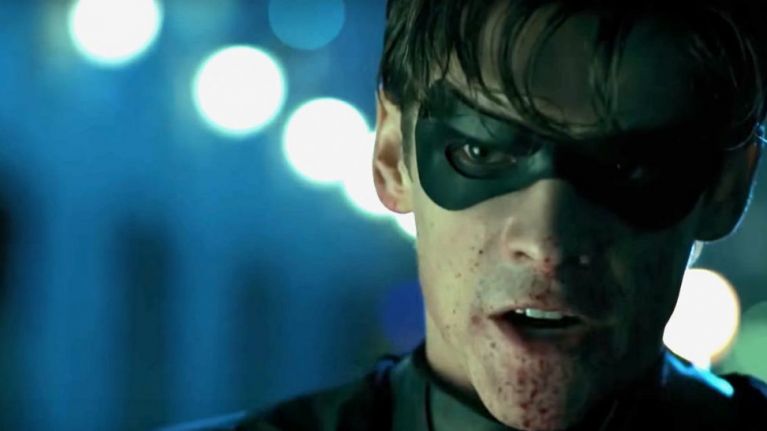
I was particularly excited to write something about this show as I’ve been anticipating it ever since it was announced that it was to be released on Netflix. As a big fan of DC I was looking forward to seeing how Titans portrayed a particularly pivotal point in the life of one of my favourite fictional characters; Dick Grayson AKA Robin/Nightwing. Safe to say, the sidekick’s introduction was presented in a way that made me extremely satisfied with how the show’s producers were handling a darker take on a relatively jovial part of the comic series.
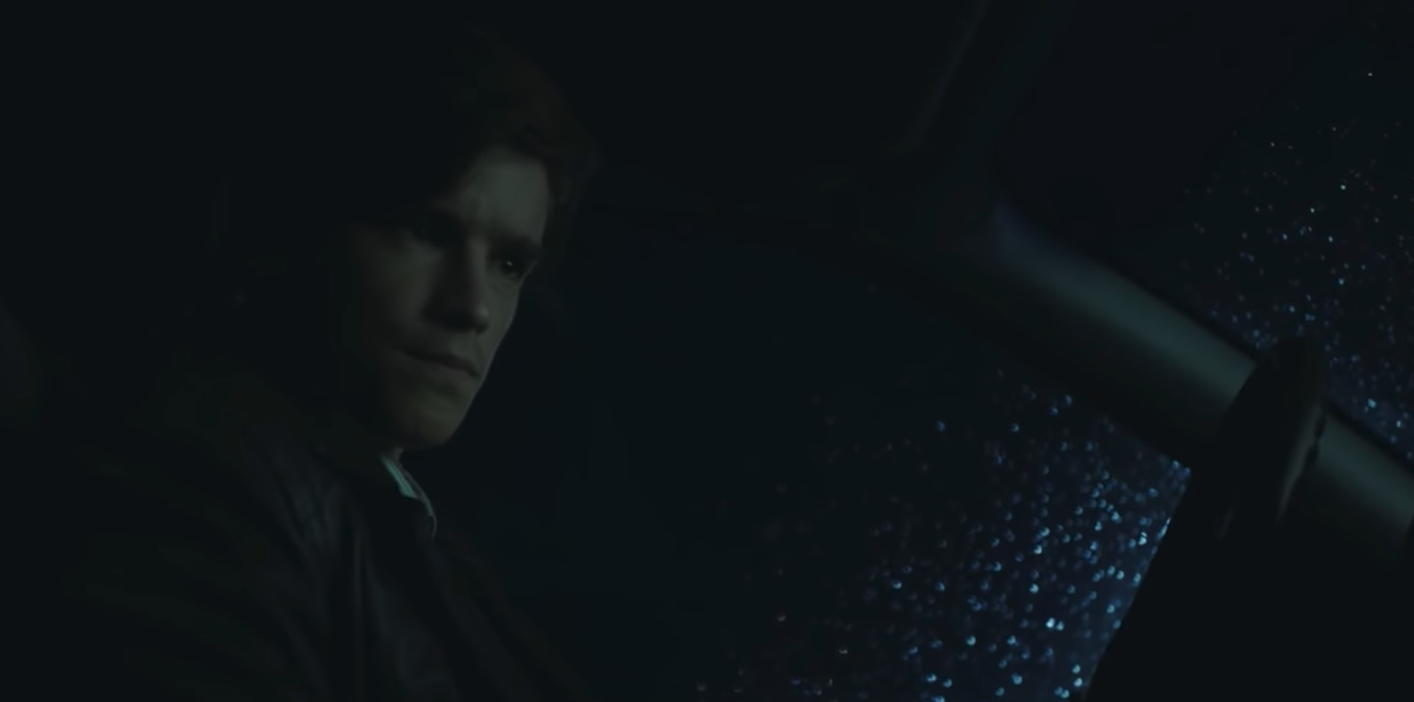
Initially, we are presented with a very clear motive for the character; he has located the criminals that he has been hunting for some time now and it’s time to finally bring them in. But rather than taking immediate action, the character hesitates. This pause presents a question to the audience; with all of this work and research done and the target within his sights, why is the character hesitating?
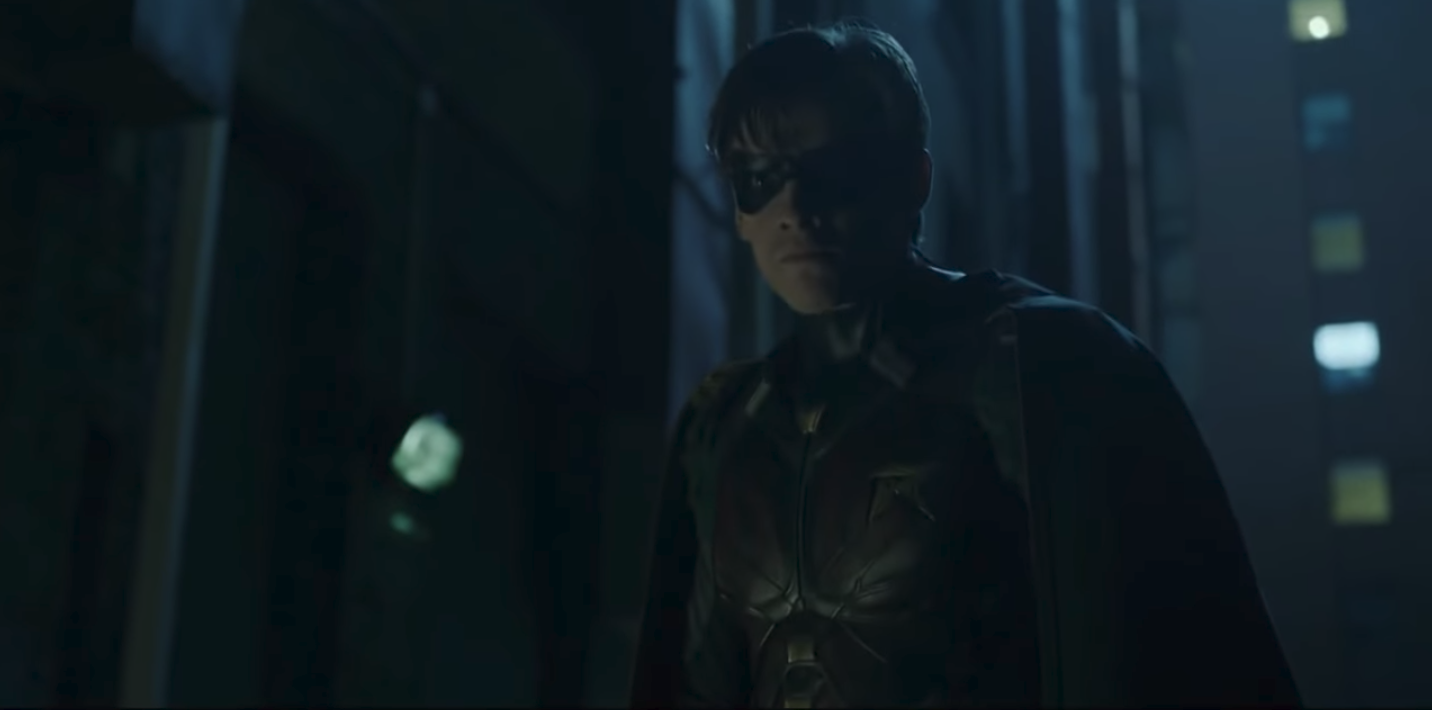
When the character first appears in costume, the camera is from a slightly lower angle and makes the character look taller and more intimidating. He has been placed on a pedestal and it immediately gives him a sense of power and authority over the criminals that were introduced prior in the scene. This is the classic presentation of a hero or protagonist character and it is immediately obvious who the audience should be supporting.
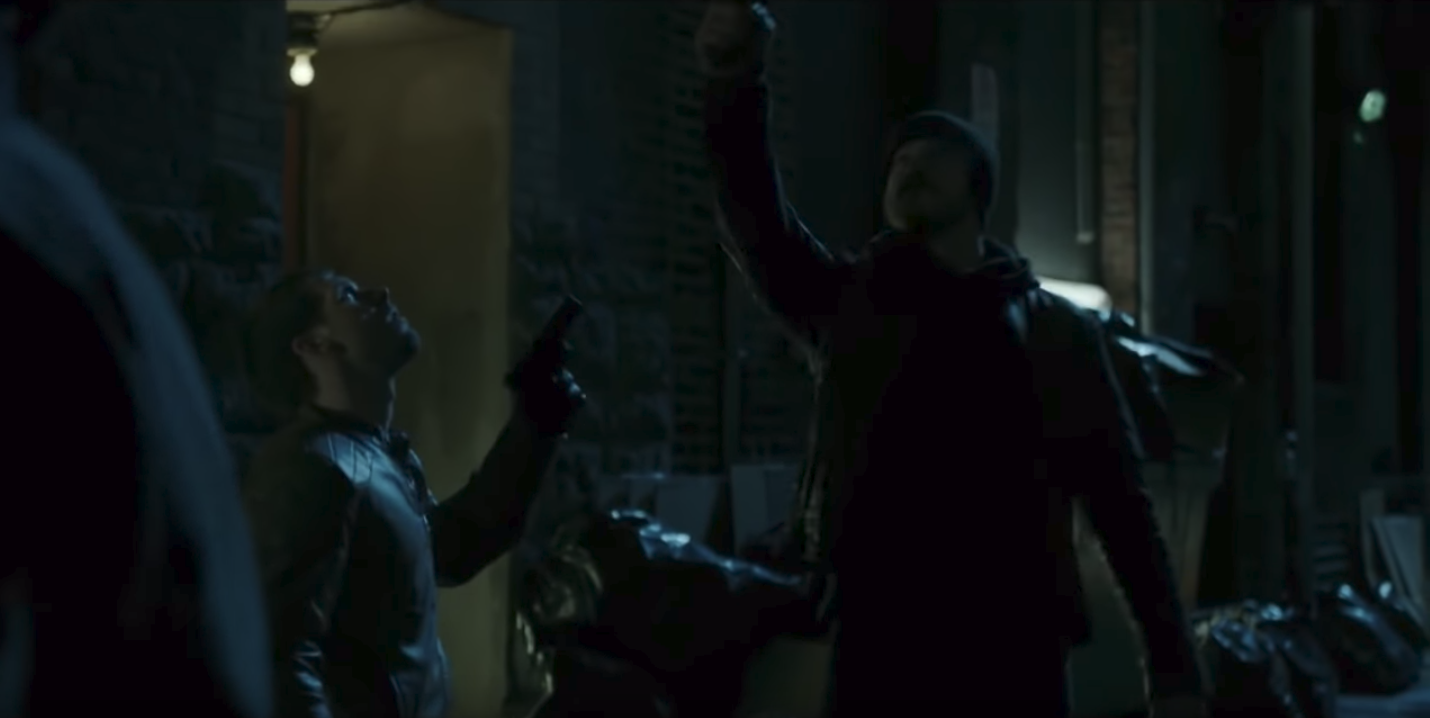
However, this authority is immediately undermined in the next shot where the antagonists pay him little to no regard and instead choose to look around for the mentor he has attempted to remove himself from instead. Having been stripped of the power he held when introduced, the audience now has an underdog character to root for rather than a regular hero.
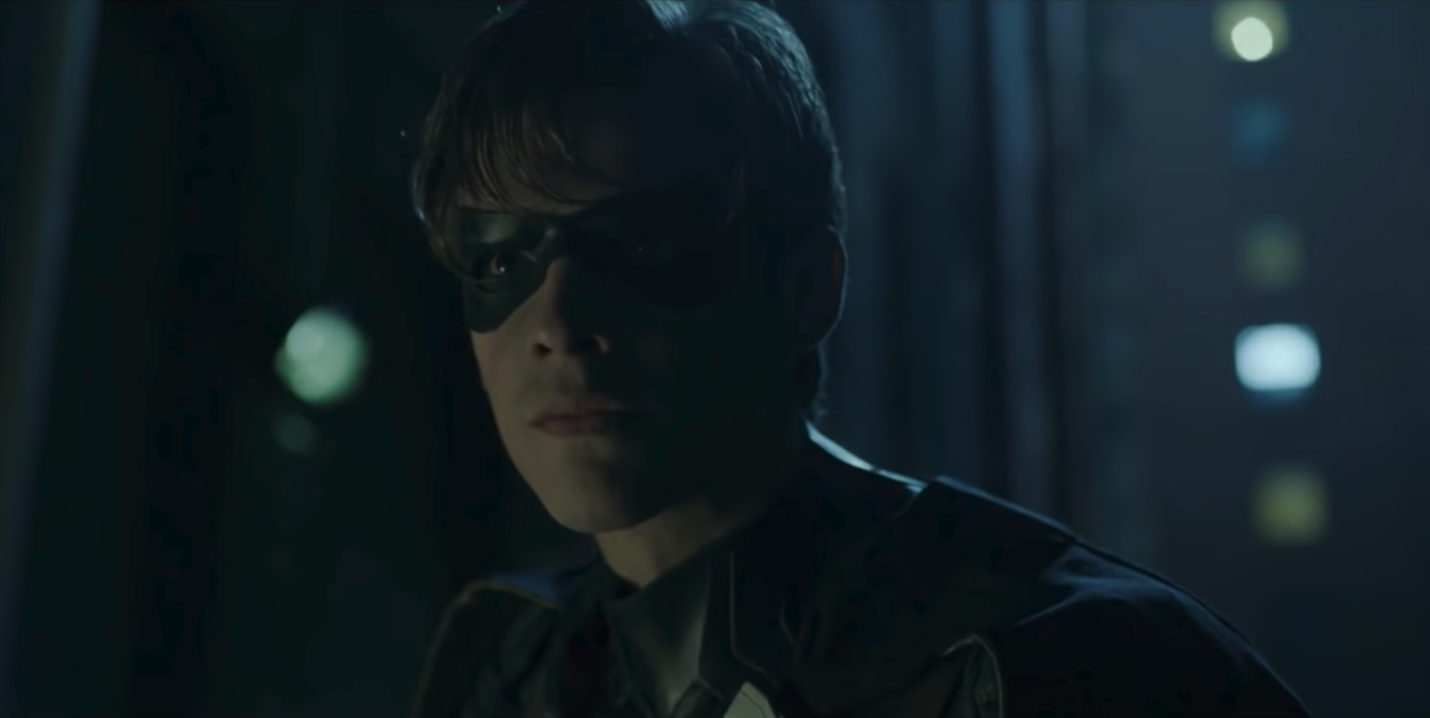
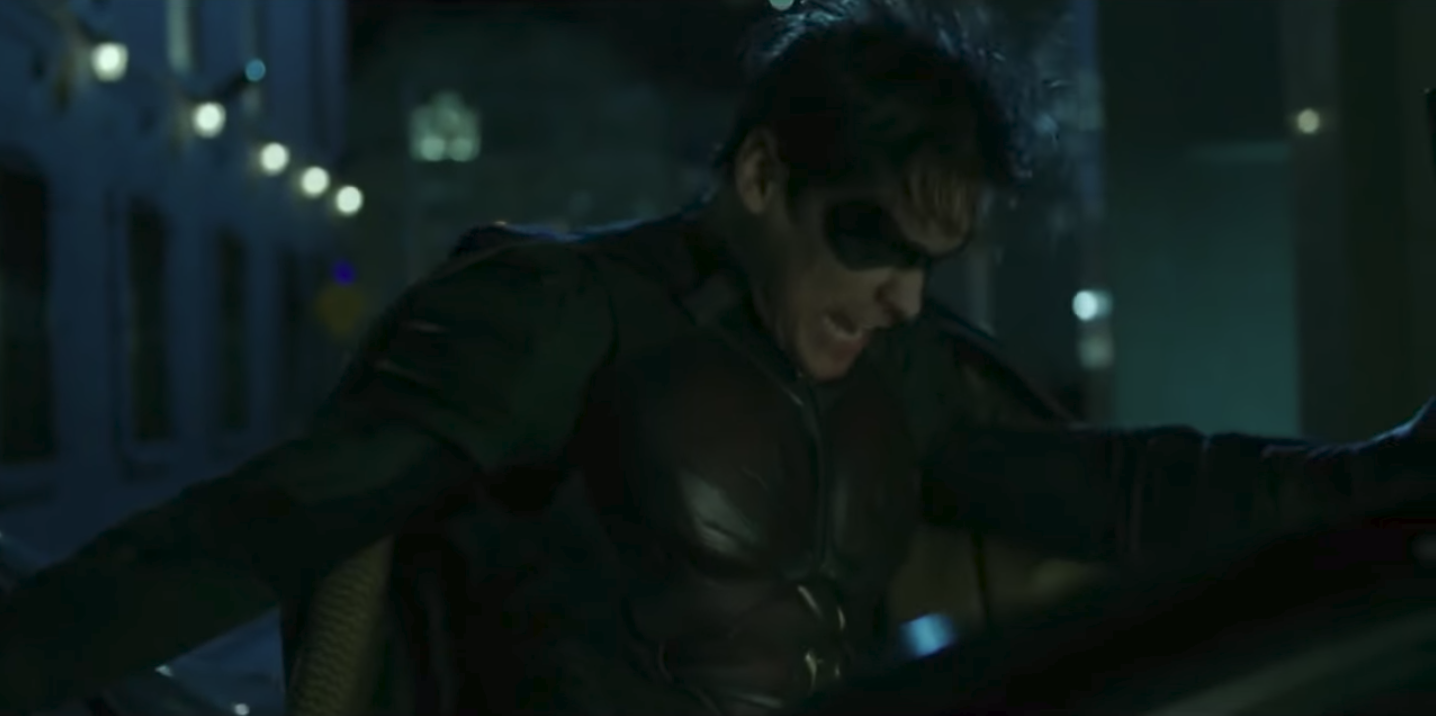
As the fight progresses, we begin to notice more and more the reason for the character’s previous hesitation. The sound effects become more distant and faded and everything falls into slow motion as Robin begins to beat the man into the floor even after it’s clear he’s already been defeated. It’s in this moment that the presented question from the beginning is answered; the character hesitated in taking action because he has a problem with controlling his violence.
Following the fight, we see the aftermath; Robin cleaning his tools whilst listening to music. Without his suit, we can see that the fight left him bruised and battered despite coming out victorious. This shows that despite being depicted as the ‘hero’ figure, the character is still human; he’s not an immortal figure.
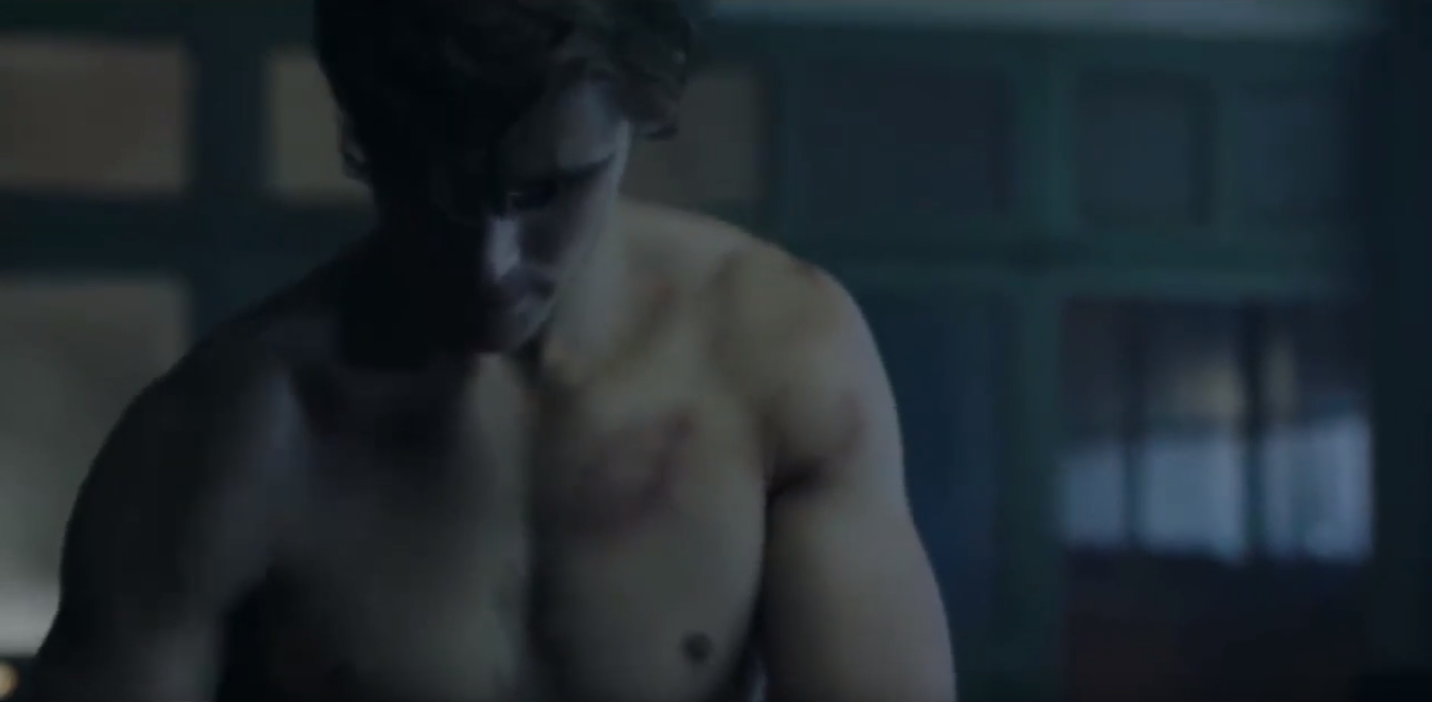
Even the choice of song, “Alone” by Monogrenade, tells us a lot about his character; at least within the context of this scene, he considers himself an independent outcast. He no longer has his mentor alongside him and everything he does is very much by himself, establishing him as a ‘lone wolf’ type from the get-go.
We then go from the relatively ‘dreamlike’ vision of violence from the alleyway fight, to him confronting the very real, tangible blood on the weapons that he used.
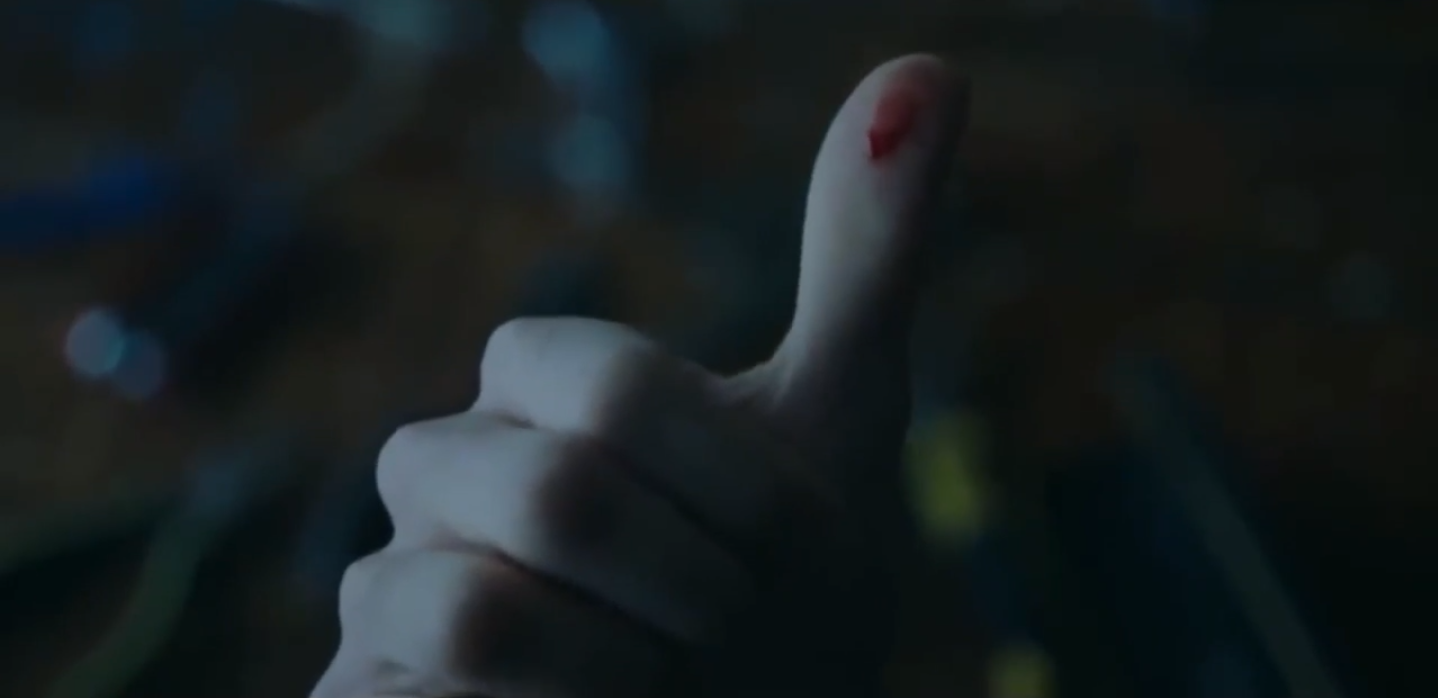
The character is acknowledging that his violent tendencies are very much a real problem and even shows some sense of remorse about the fact. It establishes that the character is flawed and is aware of that fact, but seems unable to prevent himself from following the dark path that he has set himself upon.
All in all, I feel that Warner Bros has definitely earned the right to use these characters in the show. They have great ability at showing and developing character through visual narrative alone and present the characters as extremely complex and human in their actions so that, even when in scenarios we couldn’t ever imagine being in, we can relate to them on a basic human level. I very much enjoy the way that they’re tackling this series and I can’t wait to see what happens in the second season.

 Ramblings of a Film Student